Fantasy Cricket Fielding Points Strategy IPL 2026: Catches, Run-Outs & Role Security
Most fantasy managers model runs, wickets and batting order, then treat catches and run-outs as random extras. That leaves a useful edge untouched. This fantasy cricket fielding points strategy shows how to estimate opportunity from a player's position, time on the field, team bowling profile and role security—without pretending any single chance is guaranteed.
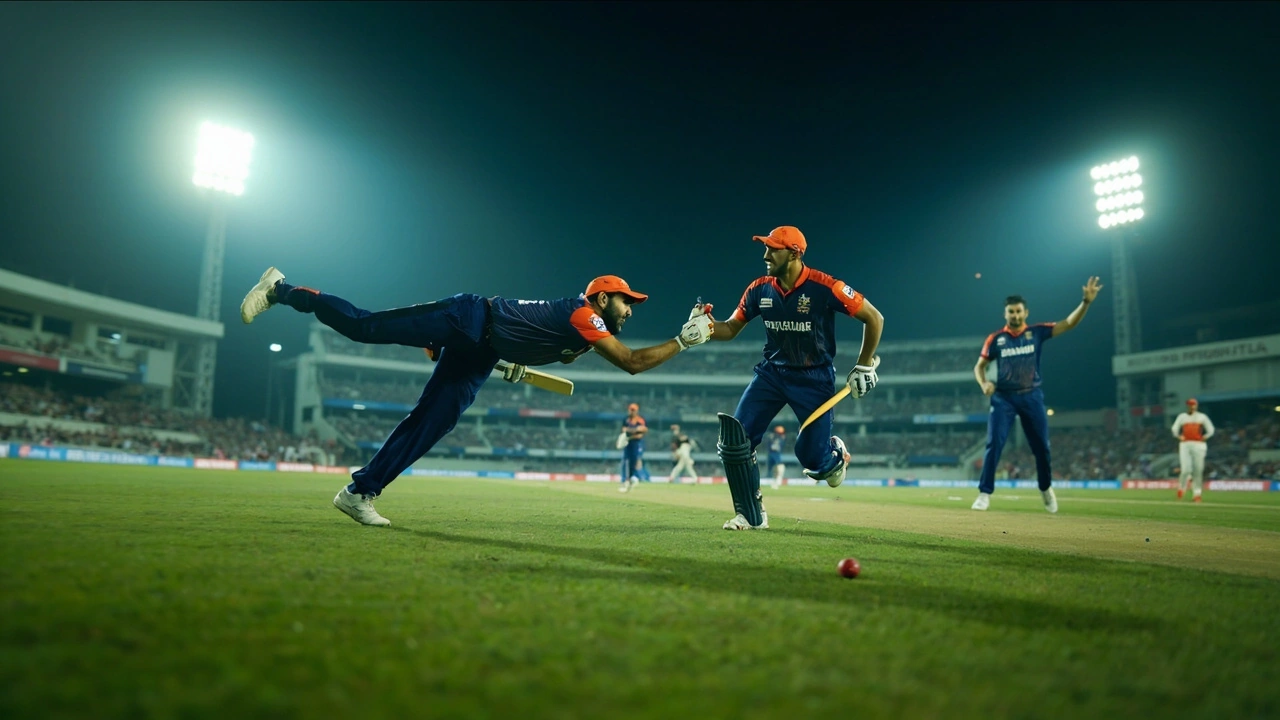
Quick takeaways
- Use fielding as a tie-breaker, not as a substitute for a secure batting or bowling role.
- Separate catch opportunity from catch skill: position and bowler type create chances.
- Downgrade players with substitution, injury or impact-player risk because time off the field removes upside.
- For small leagues, favour role certainty; for large contests, add one low-owned player with two routes to fielding points.
- Always check the scoring table on the platform you are entering because point values and bonus rules can differ.
1. Why fielding points deserve a place in your IPL 2026 model
Fielding events are low-frequency, but they can separate two otherwise similar players. Imagine two middle-order batters with comparable salary, expected balls faced and boundary rate. One fields at deep fine leg for most overs; the other moves between point and cover against pace. The second player is exposed to more driven catches, mis-hits and direct-hit chances. Neither is guaranteed points, yet their opportunity profiles are not equal.
The practical goal is not to predict, “Player A will take a catch.” It is to rank players by the number and quality of situations in which a catch, run-out or stumping can occur. This distinction keeps the method honest. A player can receive a high fielding-opportunity grade and still finish with zero. Over repeated contests, however, selecting the better opportunity when primary roles are close can improve lineup quality.
This approach also protects you from reputation bias. A famous athlete may be an exceptional catcher but spend an entire match on a quiet boundary. A less celebrated player stationed at point may see three hard chances. Fantasy points follow recorded events, not highlight compilations.
2. The four-part fielding opportunity model
Use four inputs: position exposure, chance creation, time-on-field security and conversion skill. Score each from 1 to 5, then use the total only after checking batting and bowling roles. The model is intentionally simple enough to update after the toss.
| Input | What to review | High-grade signal | Risk signal |
|---|---|---|---|
| Position exposure | Where the player normally stands by bowler and phase | Slip, ring hotspot, catching boundary | Frequently hidden in a low-traffic area |
| Chance creation | Team's bowlers, edges, miscues and pace variations | Wicket-taking attack that forces false shots | Low-pressure spells with few aerial errors |
| On-field security | Likely XI status, impact substitution and injury | Plays every phase and stays on the field | Could leave early or enter only for one innings |
| Conversion skill | Hands, speed, throwing arm and decision-making | Reliable catcher and quick release | Limited mobility or uncertain fitness |
A useful mental formula is: fielding upside = exposure × team chance creation × time on field × conversion. Do not turn this into false precision. The multiplication reminds you that one weak link matters: an excellent fielder cannot convert a chance while sitting in the dugout.

3. Fielding positions: match the location to the chance type
Position labels alone are not enough. A slip against a new-ball seamer has a different opportunity profile from a slip left in place against a settled batter. Likewise, long-on can be quiet while batters rotate safely, then become decisive when required run rate forces aerial hitting.
Close catching positions
Slip, leg slip and short cover depend heavily on bowler type and pitch response. Upgrade them when there is lateral movement, extra bounce or a batter with an early-innings edge problem. Downgrade once the field spreads and the position disappears.
Inner-ring hotspots
Point, cover, mid-wicket and short third can combine catch potential with run-out involvement. These positions suit agile fielders who attack the ball. They gain value in overs where batters push hard for singles or manufacture pace with ramps and cuts.
Boundary catching areas
Long-on, long-off, deep mid-wicket and deep square leg become relevant when the required rate rises or a matchup invites a cross-batted shot. Venue geometry matters: a longer side may produce more relay throws, while a shorter side may turn a catchable mis-hit into six.
Record actual assignments from recent matches rather than assuming the best fielder always occupies the same zone. Teams move their strongest arms to protect the most attacked boundary, and matchups can change that placement over by over.
4. Map fielding upside by match phase
Break the innings into powerplay, middle overs and death overs. Each phase creates a different mix of chances, so a player's location should be read in context.
| Phase | Typical chance sources | Useful player traits | Fantasy caution |
|---|---|---|---|
| Powerplay | Edges, mistimed drives, rushed singles | Sharp slip catcher, attacking ring fielder | Close catcher may move after only two overs |
| Middle overs | Mis-hits against spin, direct-hit run-outs, boundary relays | Anticipation, speed, clean pickup | Low required rate can suppress aerial risks |
| Death overs | High catches, boundary catches, desperate second runs | Calm under height, strong throwing arm | Sixes and wides can bypass the fielder entirely |
Then connect the phase to the team attack. A side using wrist spin through overs 7–14 may create deep mid-wicket and long-on chances. A side relying on hard-length pace can feed the square boundaries. A yorker-heavy death plan creates fewer simple boundary catches than slower-ball plans, but it can increase rushed second-run attempts after imperfect contact.
5. Run-out probability: focus on involvement, not spectacular throws
Run-outs are often described as random because direct hits are rare. The better model starts one step earlier: which players repeatedly become part of the play? Inner-ring fielders attack singles; boundary fielders handle relays; wicketkeepers and bowlers receive throws at the stumps. Involvement is broader and more stable than direct-hit conversion alone.
Create a simple three-level run-out grade:
- High: fast ring fielder at point, cover or mid-wicket; stays on the field; team applies dot-ball pressure.
- Medium: active boundary fielder with a strong arm and regular relay responsibility.
- Low: low-mobility placement, injury concern, or a position that rarely attacks the striker's running line.
Game state also matters. A chasing side with a steep required rate attempts more risky second runs. A slow surface can make boundaries harder and increase running volume. Conversely, a small ground with frequent boundaries may reduce the number of close two-run decisions even though the total scoring rate is high.

6. Role security, impact substitutions and time on the field
A fielding projection collapses if the player does not spend enough time in the field. Before assigning any grade, ask whether the player is a full XI member, a likely impact substitute, carrying a niggle, or vulnerable to being replaced after completing a specialist task.
Impact-player plans can create asymmetric exposure. A batter who is substituted out before the opposition innings offers no fielding route. A bowler entering for the defending innings may field for the full chase. The exact pattern depends on toss, team combination and platform eligibility, so confirm the final XI and substitute list instead of relying on a generic preview.
Wicketkeepers deserve separate treatment. Their catches and stumpings are linked to the bowling attack, while their batting role supplies the primary floor. A keeper batting in the top four and operating behind the stumps has multiple scoring routes. A lower-order keeper may still be viable on a turning pitch, but should not be treated as automatically safe merely because dismissals are possible.
Fitness news has direct relevance. Shoulder, hamstring and finger concerns can change throwing strength, movement and catching confidence even when a player remains in the XI. If the status is uncertain, mark the fielding grade down rather than assuming a full workload.
7. Apply fielding grades to small-league and large-contest teams
Small leagues and head-to-heads
Prioritise secure primary roles. If two players project similarly for runs or wickets, prefer the one with full match involvement and a strong fielding location. This adds a secondary route without sacrificing the floor. Avoid selecting a specialist batter with an unstable spot solely because he is known as a good catcher.
Large contests
Fielding can support a differentiated player when the crowd focuses only on batting form. The best candidate still needs at least one primary route—top-order balls, a meaningful bowling spell or wicketkeeping. Fielding then creates the extra ceiling that can separate the lineup.
Captain and vice-captain decisions
Do not captain a player for catches alone. Use fielding to break a close decision between multi-role assets. An opener who also fields in a hotspot has a broader ceiling than an equally rated opener likely to leave the field or hide on a quiet boundary. For bowling captains, check whether their overs reduce their time in a valuable position; bowlers cannot take a catch while delivering the ball.
Build the rest of the lineup through our fantasy cricket strategy hub, then cross-check the site's latest cricket news for selection and fitness updates before lock.

8. A 10-minute pre-lock fielding workflow
- Confirm the XI: remove non-starters and identify likely impact substitutions.
- Write the primary role: batting position, expected overs and wicketkeeping status.
- Tag the likely fielding zone: close catcher, ring attacker, relay fielder or catching boundary.
- Match the team attack: estimate whether its bowlers create edges, miscues or rushed running.
- Check phase exposure: note whether the position remains relevant after the powerplay.
- Review venue and game state: boundary dimensions, surface pace, dew and likely chase pressure.
- Apply a confidence label: confirmed, probable or uncertain—never disguise uncertainty as a decimal.
- Use it as the tie-breaker: only after salary, role and ownership have been evaluated.
A spreadsheet needs only five columns: player, primary role, fielding zone, on-field security and fielding grade. Add a short note such as “point versus pace” or “long-on versus leg spin.” That note makes the grade auditable when the next match reveals a changed assignment.
9. Common fielding-model mistakes to avoid
- Chasing the previous match: one two-catch game does not guarantee the same position or opportunity next time.
- Confusing skill with volume: great hands cannot score without chances.
- Ignoring platform rules: points for catches, stumpings, direct hits and multiple-catch bonuses vary.
- Overrating substitute scenarios: eligibility and credit can differ when another player completes the fielding act.
- Skipping the toss update: the final XI, impact list and defending/chasing order change time-on-field projections.
- Using fabricated percentages: if position data is uncertain, say so and reduce confidence.
The strongest process is modest: establish the main fantasy role, add a transparent fielding-opportunity grade, and update it when evidence changes. That is more reliable than promising exact catch probabilities from incomplete public data.
Frequently asked questions
Are fielding points predictable in fantasy cricket?
A particular catch is not predictable with confidence. Opportunity can be ranked, however, using fielding position, team chance creation and time on the field. Treat the output as a relative grade, not a guaranteed event.
Should I pick a player only for catching ability?
Usually no. Batting position, overs, wicketkeeping and role security should create the base projection. Catching ability is most useful as a tie-breaker between players whose primary roles are close.
Which positions offer the most fantasy fielding upside?
It varies by matchup. Slips can benefit against new-ball movement, point and cover see ring chances, and long-on or deep mid-wicket become active against spin and late-innings hitting. Always connect the position to bowler type and phase.
How do substitute fielders affect fantasy selection?
Contest rules differ. Do not assume a player receives credit for an event completed by a substitute, or that every substitute is eligible for points. Read the current scoring rules on the platform before entry.
Can fielding points decide captaincy?
They can strengthen an already sound captain case. A multi-role player with secure fielding exposure has more scoring routes, but catches alone are too volatile to carry a captaincy decision.
Build your next lineup with role clarity
Start with batting and bowling opportunity, add fielding as a disciplined tie-breaker, and revisit every assumption after the toss.
Explore Fantasy Cricket Guides