KKR vs SRH Match 6 Fantasy Board, 2 April 2026: Eden Gardens Notes From the Opening Week
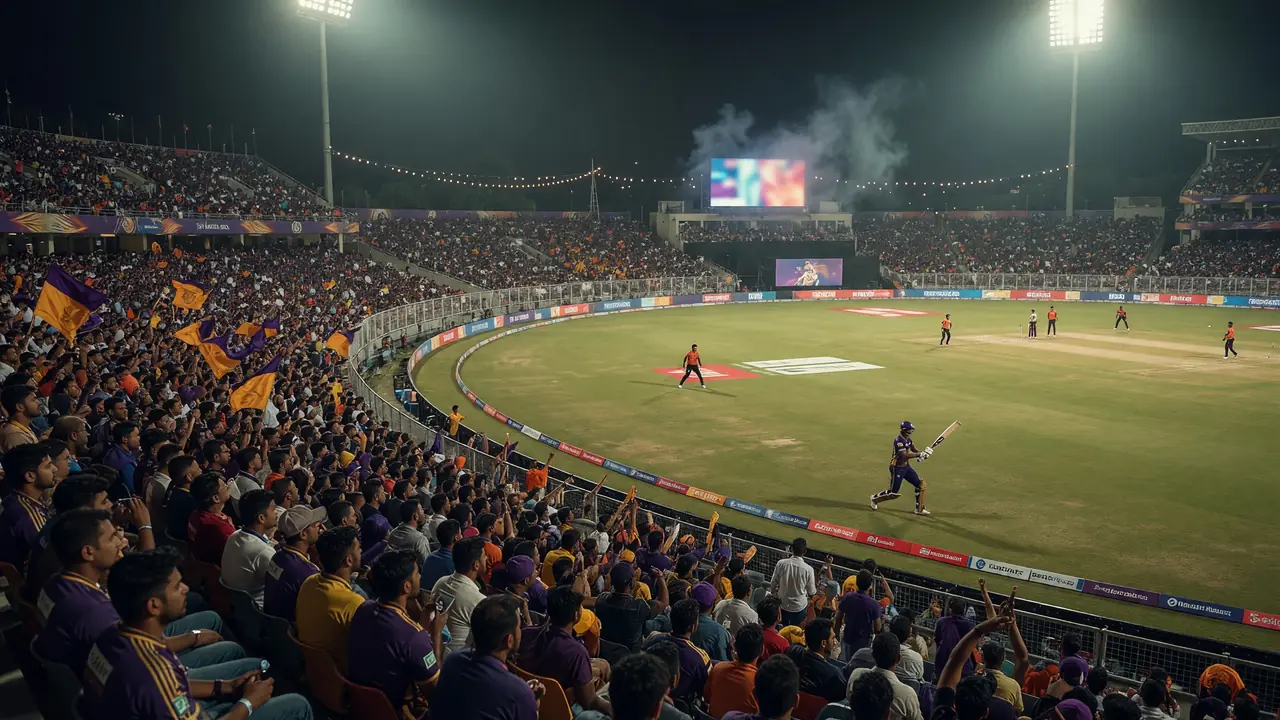
On Thursday, 2 April 2026, IPL Match 6 sent Kolkata Knight Riders and Sunrisers Hyderabad to Eden Gardens for a 7:30 PM IST start. Both sides had lost their openers by six wickets. The pre-match fantasy conversation that night was not about table position. It was about who still had a full bowling attack, who still had a home spin axis, and which names still looked secure after one incomplete first week.
Why this Match 6 brief still matters
Early IPL weeks age quickly. Lineups change, injuries settle, and one loud scoreline can rewrite ownership for a fortnight. The KKR–SRH board from 2 April 2026 is worth keeping for a different reason: it freezes the first honest picture of both squads after their opening defeats, before later form cleaned the narrative.
Cricketwebs published the pre-match prediction and fantasy guide that morning. The verified record from that brief is narrow and useful. Match details, both openers’ scorelines, head-to-head history, named absences, Eden Gardens conditions, broadcast details and a concrete fantasy XI were all on the public board. Everything below stays inside that factual ceiling and reads it as a retrospective for managers who still study venue templates and early-season availability risk.
For broader role security, captain logic and salary-cap process beyond a single fixture, the long-running notes live under Fantasy Cricket.
Match card locked for 2 April 2026
| Item | Detail from the pre-match board |
|---|---|
| Fixture | Kolkata Knight Riders vs Sunrisers Hyderabad, 6th T20, IPL 2026 |
| Date and time | Thursday, 2 April 2026, 7:30 PM IST |
| Venue | Eden Gardens, Kolkata |
| Broadcast | Star Sports Network on television; JioHotstar for digital streaming in India |
| Opening-week form | KKR lost to Mumbai Indians by 6 wickets; SRH lost to Royal Challengers Bengaluru by 6 wickets |
| Head-to-head cited | KKR 20 wins, SRH 10 across 30 meetings; KKR 8 wins in 11 prior Eden Gardens meetings against SRH |
| Pre-match lean | KKR favoured at roughly 65% in that analysis, on home advantage, H2H and spin strength |
Those numbers do not prove a result. They explain why ownership that night tilted toward KKR’s home spin pair and why SRH’s top-order names still demanded coverage despite the Chinnaswamy defeat.
What the two openers actually told managers
KKR’s first night was a batting statement followed by a bowling problem. Against Mumbai Indians they posted 220, then watched the chase finish with six wickets and 14 balls unused. Ajinkya Rahane made 67 off 47. Finn Allen struck 37 off 17. Angkrish Raghuvanshi added 51 off 29. The runs were real. The attack that had to defend them was not.
SRH’s opener had the same shape with different names. They made 201 at Chinnaswamy and still lost by six wickets with 26 balls remaining. Ishan Kishan’s 80 off 38 and Aniket Verma’s 43 off 18 kept the total competitive. Travis Head (11) and Abhishek Sharma (7) did not. For fantasy, that split mattered more than the final margin: SRH still had ceiling names, but the first game already separated secure hitters from volatile openers.
Both defeats arrived with the same warning label. High first-innings totals do not automatically produce bowling points. Managers who only copied the team that “posted 200” without checking overs, roles and fitness walked into Match 6 with the wrong half of the scorecard.
Availability notes that reshaped the credit map
The cleaner edge on 2 April sat in the injury column, not the highlight reel.
- KKR pace absences: Harshit Rana and Akashdeep were ruled out for the season. Matheesha Pathirana’s availability was still uncertain. Cameron Green carried a lower-back concern that limited his bowling value even if he stayed in the XI.
- SRH pace absences: Pat Cummins was out with a lower-back injury for most of the season. Brydon Carse was dealing with a hand injury. That pushed more new-ball and death responsibility toward Jaydev Unadkat, Harshal Patel and the remaining seam depth.
Those notes changed more than team strength. They changed who could reasonably be projected for a full four-over quota. Green’s batting remained useful; his dual-role premium did not, not while the lower back capped the bowling half. Pathirana could not be treated as locked. Cummins could not be treated as a late surprise. Fantasy boards that still priced those names as ordinary all-phase assets were pricing a different squad than the one walking out at Eden Gardens.
The practical translation was simple. Prefer players with confirmed overs or confirmed top-order balls. Discount half-roles. If a bowler’s only path to points was “maybe three overs if the matchup appears,” he belonged on the watchlist, not in the core.
Eden Gardens conditions on the board that night
The weather note was clean: clear skies, temperatures around 24–32°C, effectively no rain threat, and moderate dew later. The pitch conversation followed the usual Eden Gardens T20 pattern cited in the brief — early seam, then middle-overs grip for spin, with first-innings style scores discussed in the 180–200 band.
That template explains the ownership gravity around Sunil Narine and Varun Chakravarthy. It also explains why SRH’s left-right top order still had chase appeal if dew arrived, and why pure hit-the-deck pace without variations looked thinner once the ball got older. Managers did not need a secret model. They needed to stop treating Eden Gardens like Chinnaswamy or Wankhede just because both openers had already produced 200-plus totals elsewhere.
Head-to-head weight without turning it into destiny
The public H2H package was blunt. Across 30 meetings, KKR led 20–10. At Eden Gardens the split cited was 8 wins in 11 prior games against SRH. Those figures supported the home lean. They did not erase Heinrich Klaasen.
Klaasen’s record against KKR was the single loudest batting counterweight on the board: 319 runs in 10 matches at a strike rate of 186.50, including an unbeaten 105 off 39 in their previous meeting. That is not a flavour note. It is the reason a home favourite still had to budget for a middle-order spike. Fantasy sides that stacked KKR bowling without any SRH ceiling batter were choosing correlation over the one matchup the brief itself flagged as dangerous.
Rahane’s longer body of work against SRH also sat in the same brief, with 531 career runs cited against them. Combined with his 67 off 47 in the opener, he read as the stable KKR batting spine rather than a pure upside dart.
The fantasy XI frozen on the pre-match board
The brief’s listed combination mixed KKR’s home base with SRH’s highest-ceiling hitters:
| Role | Player | Side | Why he was on the board |
|---|---|---|---|
| WK | Angkrish Raghuvanshi | KKR | Fresh 51 off 29 and a batting role that offered more than pure keeping minutes |
| BAT | Ajinkya Rahane | KKR | Opener form plus a long SRH record; floor in a volatile week |
| BAT | Heinrich Klaasen | SRH | Elite KKR matchup numbers and middle-order ceiling |
| BAT | Travis Head | SRH | Powerplay upside even after an 11-run opener |
| AR | Cameron Green | KKR | Batting depth; bowling half marked down on the back issue |
| AR | Sunil Narine | KKR | Home spin overs plus lower-order hitting route |
| AR | Nitish Kumar Reddy | SRH | Secondary bowling and lower-middle batting bridge |
| BOWL | Varun Chakravarthy | KKR | Eden Gardens middle-overs wicket route despite a quiet opener |
| BOWL | Harshal Patel | SRH | Death and change-up overs in a thinned SRH attack |
| BOWL | Jaydev Unadkat | SRH | New-ball responsibility with Cummins unavailable |
| BOWL | Blessing Muzarabani | KKR | Height and bounce as KKR’s available pace option |
Read as a construction lesson, the XI is a 6–5 style split with three clear ideas. First, lock players who still had primary roles after the openers. Second, keep one or two SRH ceiling batters so a home bowling stack could not wipe the whole side. Third, avoid loading uncertain overs from injured or half-fit names just because their brand value remained high.
Captaincy logic inside that board pointed at multi-route players. Narine offered overs plus hitting. Klaasen offered pure batting ceiling against a specific attack. Rahane offered the safer floor if the contest rewarded consistency over spike. The brief did not need more mythology than that.
Where the pre-match lean came from
The published favourite call was KKR, at about a 65% win chance in that analysis. The reasons listed were ordinary and coherent: home crowd and conditions, the 20–10 overall H2H, the 8-in-11 Eden Gardens record against SRH, and confidence in the Narine–Chakravarthy middle-overs axis once the surface slowed.
SRH’s path, as framed the same morning, depended on the batting core outrunning a depleted seam unit. If Head or Abhishek rediscovered timing, and if Klaasen faced enough balls against KKR’s spin and pace changes, the chase or set total could still clear the home side. If the top order repeated Chinnaswamy’s quiet start, the bowling absences left fewer ways to drag the game back.
That is the honest shape of an early-season home favourite. Not invincible. Just better supplied with confirmed roles on the night’s surface.
A cleaner way to reuse this brief in later contests
Managers still open old previews for the wrong reason — to copy names. The durable pieces from Match 6 are process checks:
- Separate batting proof from bowling proof. 220 and 201 said nothing automatic about wicket equity.
- Price injuries as missing overs, not missing vibes. Cummins, Carse, Rana, Akashdeep and a limited Green changed the credit map more than either openers’ run tallies.
- Keep one opposite-side ceiling batter against a home bowling stack. Klaasen was the named reason on this board.
- Let venue phase value lead. Eden Gardens middle overs elevated mystery spin; pure reputation pace without a locked spell did not.
- Use H2H as context, not a substitute for XI confirmation. 20–10 explained lean, not individual ownership.
Those checks travel to later Eden Gardens nights and to any week when two 200-plus batting cards hide thin bowling depth. The names will change. The failure mode will not.
Legacy of the 2 April board
By the time later IPL weeks rewrote form tables, the Match 6 brief had already done its useful work. It recorded the first joint availability crisis of the KKR–SRH season, preserved Klaasen’s concrete KKR numbers, and showed how a home spin pair becomes the default scaffold when both sides are chasing a first win.
The lasting comparison is not “who should have won.” It is how quickly fantasy value moved from brand names toward confirmed overs and confirmed batting order once the injury list hardened. That is the part of 2 April 2026 still worth carrying into any later Eden Gardens fixture between these two sides, or any opening-week slate where both clubs arrive with loud batting and incomplete attacks.
Frequently asked questions
When was KKR vs SRH Match 6 of IPL 2026 played?
The fixture was scheduled for Thursday, 2 April 2026 at Eden Gardens, Kolkata, with a 7:30 PM IST start, as the sixth T20 of IPL 2026.
What were the two teams’ results before that game?
KKR had lost their opener to Mumbai Indians by six wickets after posting 220. SRH had lost their opener to Royal Challengers Bengaluru by six wickets after posting 201.
Which injuries shaped the fantasy board?
For KKR, Harshit Rana and Akashdeep were ruled out for the season, Pathirana’s availability was uncertain, and Cameron Green’s lower-back issue limited bowling. For SRH, Pat Cummins was out with a lower-back injury for most of the season and Brydon Carse had a hand injury.
Why did Klaasen stay central against KKR?
The pre-match record cited 319 runs in 10 matches against KKR at a strike rate of 186.50, including an unbeaten 105 off 39 in their previous meeting.
Who appeared in the listed fantasy XI?
Angkrish Raghuvanshi, Rahane, Klaasen, Head, Cameron Green, Narine, Nitish Kumar Reddy, Varun Chakravarthy, Harshal Patel, Jaydev Unadkat and Blessing Muzarabani.
Where could fans watch the match in India?
Television coverage was listed on Star Sports Network, with digital streaming on JioHotstar.